
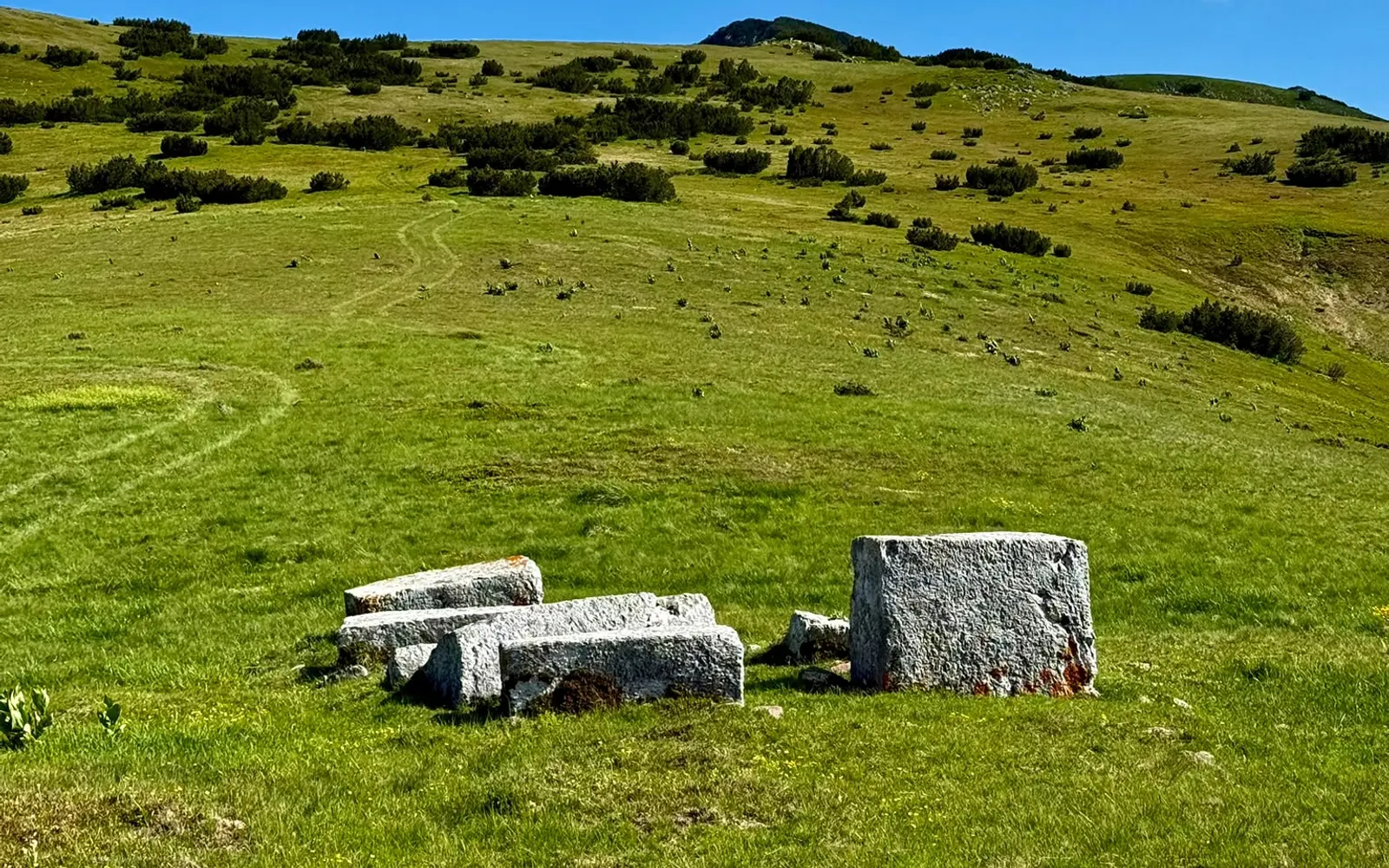
Picture a mountain pasture at around 1,700 metres, dwarf pines, total silence - and in the middle of the grass, massive blocks of stone carved more than five centuries ago. The names of most people buried beneath them are long forgotten, but the carvings in the stone still tell of their world. These are stećci, medieval tombstones, and Zelengora hides more of them than most hikers realise.
In this guide you will find where the stećci necropolises on Zelengora are, why they are UNESCO-listed, how to reach them, what to pack and how to combine the mountain with rafting on the Tara.
Zelengora at a glance
- Where: south-eastern Bosnia and Herzegovina, in Sutjeska National Park, across the municipalities of Foča, Kalinovik and Gacko
- Highest peak: Bregoč (2,014 m)
- Lakes: Orlovačko, Donje and Gornje Bare, Crno, Bijelo, Kotlaničko, Štirinsko and Borilovačko - known locally as the "mountain eyes"
- Landscape: high pastures, dwarf pine, beech and conifer forest, shepherd settlements (katuni)
- Stećci: the UNESCO-listed Čengića Bara necropolis and several smaller groups across the pastures
What are stećci and why do they matter?
Stećci are monumental stone tombstones, mostly of limestone, made between the 12th and 16th centuries and most intensively in the 14th and 15th. About 70,000 are known, spread across Bosnia and Herzegovina, Croatia, Montenegro and Serbia. Nowhere else in Europe do monuments of this kind survive in such numbers.
By shape, they are:
- slabs - flat stone blocks laid on the ground,
- chests - rectangular blocks, sometimes on a base,
- gabled tombstones - with a pitched roof, like a small house,
- crosses and pillars - standing monuments.
Many are decorated with reliefs: the kolo (round dance), deer hunts, shields and swords, vines, crosses and rosettes. Some carry inscriptions in Bosnian Cyrillic (bosančica). These motifs are one of the few windows into how people in the medieval Balkans lived and what they valued.
Stećci on the UNESCO World Heritage List
In 2016 UNESCO inscribed a joint nomination by four countries, "Stećci Medieval Tombstone Graveyards", on the World Heritage List. It covers 28 sites with about 4,000 stećci. One of them is right on Zelengora: the Čengića Bara necropolis.
Why stećci in the mountains?
For centuries, the high pastures of Zelengora were summer grazing land for herders. Katuni - summer shepherd settlements - still stand where villages and graveyards once were. That is why stećci are found not only near former settlements in the valleys, but also on mountain pastures and beside the lakes. Walking here today, you follow the same paths that people and livestock used five or six hundred years ago.
Stećci sites on Zelengora
Čengića Bara - the UNESCO necropolis at 1,370 m
The necropolis sits on a gentle hill in a karst valley, about 11 km south-west of Kalinovik, near Čengića Bara - a summer cattle-herding settlement in the high karst field of Kladovo Polje. The whole site lies within Sutjeska National Park.
- Number of tombstones: the Commission to Preserve National Monuments recorded 52 (11 slabs, 35 chests - many of them tall chests on a base - and 6 gabled tombstones), while a 2012 survey by the Republika Srpska heritage institute recorded 54.
- Decoration: 19 tombstones are decorated. The most common motifs are twisted bands and friezes of winding vines with trefoils, along with shields and swords, crosses in round wreaths, birds, deer and deer-hunting scenes, the kolo dance and a knights' tournament.
- Inscription: one tombstone names Stojan Opodinović as buried there.
- Layout: the tombstones face west-east and are set in rows. About 100 m to the south-east there is a quarry, most likely the source of the stone.
A gravel road leads to the necropolis, and the site has basic tourist signs. Many tombstones have partly sunk into the ground and are covered in lichen and moss, so take your time - the reliefs show best in low morning or late-afternoon light.
Štirinsko Lake - about 80 stećci by Zelengora's largest lake
Štirinsko Lake (1,672 m) is the largest lake on Zelengora - about 600 m long and 350 m wide. Between Klek peak and the lake there is a necropolis of about 80 stećci, some of them decorated with reliefs. It is one of the most striking meetings of nature and history on the mountain: a medieval graveyard above still water, with views across half of Zelengora.
Štirinsko Lake is part of the popular Zelengora lakes hike: Borovno Brdo (1,720 m) - Kotlaničko Lake - Štirinsko Lake - Borilovačko Lake - Orlovačko Lake.
Zavidež and Borilovačko Lake - lesser-known sites
- Zavidež: a necropolis of 15 undecorated stećci, slowly sinking into the ground. Few people know about it, so you will probably have it to yourself.
- Borilovačko (Jugovo) Lake: west of the lake there are seven stećci - one gabled tombstone and several unworked stone blocks. Borilovačko is the only artificial lake on Zelengora and lies on the hiking route from Štirinsko to Orlovačko Lake.
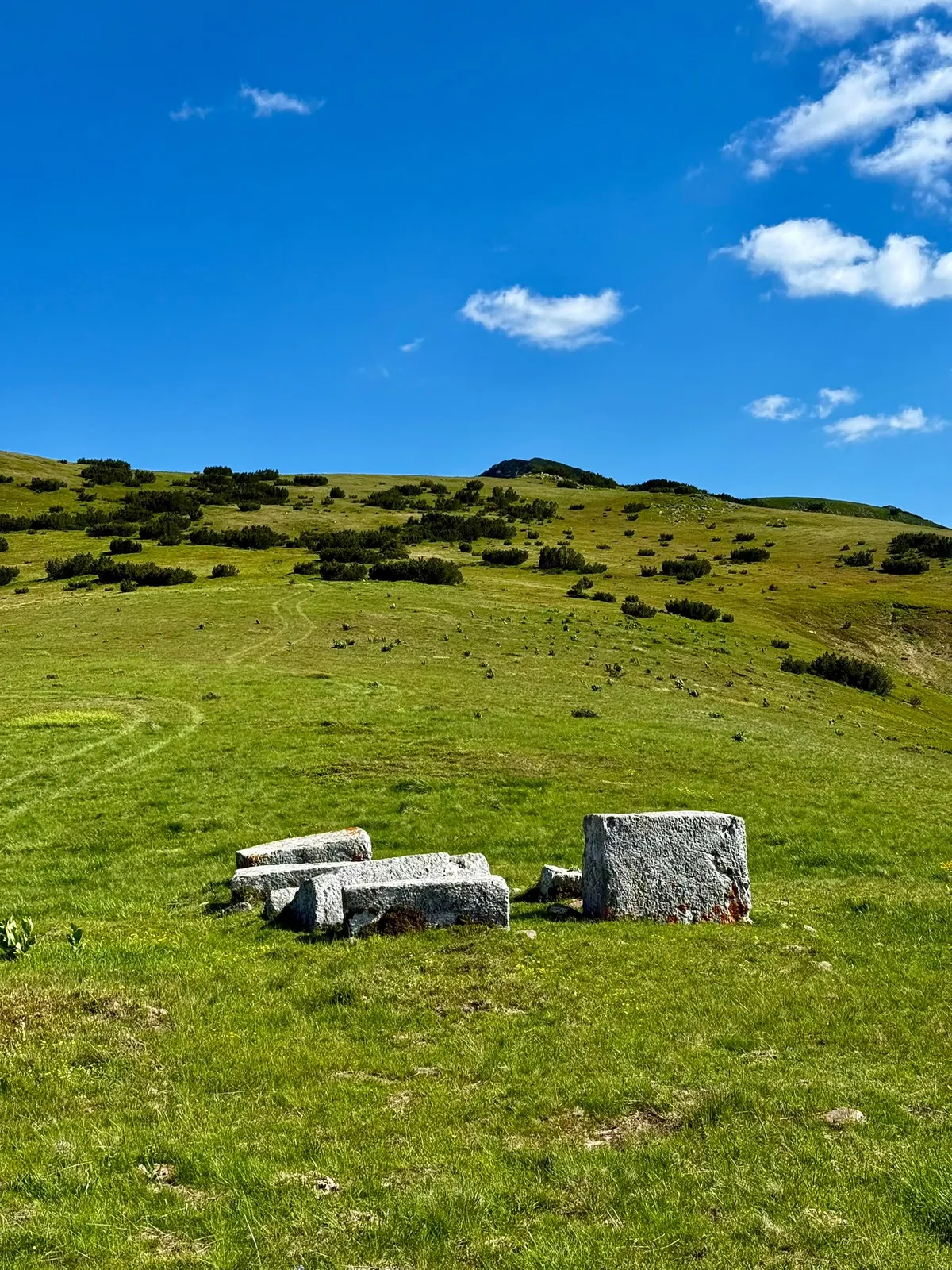
Beyond these, smaller groups of stećci lie on other pastures and katuni across Zelengora - often unmarked, like the ones in the photo below. Local guides and shepherds know best where to find them.
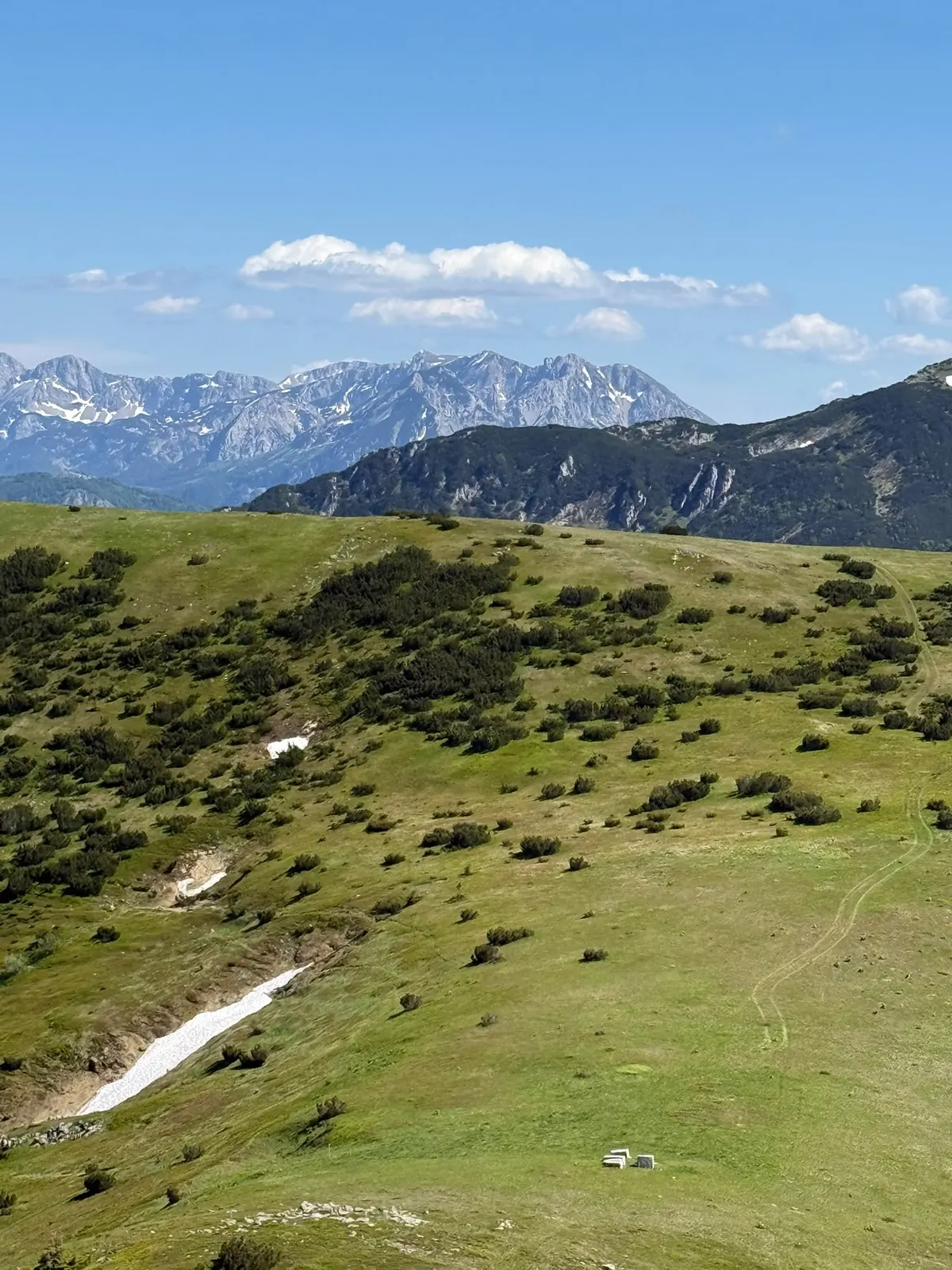
Look closely at the bottom of the photo: the small white dots on the pasture are stećci. Only when you walk up to them do you realise how big they are.
Nearby: the Gvozno necropolis
If you approach Zelengora via Kalinovik, it is worth a detour to the Gvozno necropolis on Treskavica mountain, about 11 km north-west of Kalinovik. It is also UNESCO-listed. The Commission to Preserve National Monuments recorded 87 tombstones, 14 of them decorated with hunting and kolo scenes, dogs and winged dragons. In the Middle Ages the whole Kalinovik area lay on important routes - documents from 1406 mention a customs post of Duke Sandalj Hranić Kosača.
Practical tips for visitors
How to get to Zelengora
- To Čengića Bara: from Kalinovik, about 11 km south-west on a gravel road. Check road conditions before you go, especially after rain.
- To Štirinsko Lake and the Zelengora lakes: from Tjentište, the headquarters of Sutjeska National Park. A 4x4 takes 1.5 to 2 hours to Borovno Brdo, then it is about an hour's walk to Kotlaničko Lake and another hour to Štirinsko Lake.
- From Rafting Camp Eden: Tjentište is about an hour's drive via Foča.
Most of Zelengora requires an off-road vehicle. Driving off designated roads is not allowed in the national park, and camping is only permitted at sites approved by the park. There is an entrance fee for Sutjeska National Park - at the time of writing, 10 KM per person.
What is the terrain like?
- Mostly gentle grassy pastures and broad ridges, with some short, steeper climbs and descents.
- The full-day lakes hike takes 9-10 hours, including 5-6 hours of walking. A good level of fitness is needed.
- Trails are waymarked, but not everywhere - in fog it is easy to lose your bearings.
- There is no mobile signal across much of the mountain.
- Snow patches can linger in gullies into the summer.
What to pack
- hiking boots with a good grip,
- layers and a rain and wind jacket - weather at 1,700 m can change within half an hour,
- at least 1.5-2 litres of water per person and food for the whole day,
- sunscreen, a hat and sunglasses - there is no shade on the pastures,
- mosquito and tick repellent (especially in May and June),
- an offline map or GPS track and a charged phone,
- cash in KM for the park entrance fee.
When to go
- Late June and July: the pastures are at their greenest and the mountain is in bloom.
- August: the most stable weather and the warmest lakes for a swim.
- September and early October: autumn colours, fewer people and the best light for photographing stećci.
- May and early June: often snow on the higher ground, and roads can be muddy.
How to behave around stećci
Stećci are graves and protected cultural heritage. Do not climb on them, do not move stones and do not scrape off lichen or moss to see the reliefs better - it permanently damages the stone surface. Take photos, take your time, and leave them as you found them.
After Zelengora - the Tara, rafting and a rest at the camp
A day on Zelengora is long and full of impressions, and the best way to follow it is somewhere you can rest and do something completely different. Rafting Camp Eden sits where the Tara and the Piva meet to form the Drina, at Šćepan Polje, about an hour's drive from Tjentište. After mountain pastures and medieval necropolises, your next day can look like this: breakfast by the river, then a descent through the Tara River Canyon, the deepest canyon in Europe.
- 2-day and 3-day rafting - €105 and €150 per person, with bungalow accommodation, meals and rafting. Ideal for one day on the river and one on Zelengora.
- Guided Zelengora tour - a full-day hike (about 8 hours, 10 km) from our guided hikes, with transport and a licensed guide, €60 per person. Ask us when booking which stećci sites the route includes.
- Adventure Tour - 5 days of rafting, hiking, horseback riding and a lake cruise. See the Adventure Tour.
- Accommodation - bungalows or A-frame cabins on the bank of the Drina, to recover after a full day on foot.
On weekdays we give 20% off all packages. If it is your first time rafting, read Tara rafting for beginners - no experience is needed, and every raft has a licensed skipper.
Stećci on Zelengora FAQ
Are the stećci on Zelengora UNESCO-listed?
Yes. The Čengića Bara necropolis on Zelengora (Kalinovik municipality) is one of the 28 sites inscribed on the UNESCO World Heritage List in 2016 as "Stećci Medieval Tombstone Graveyards". It lies within Sutjeska National Park.
Where are the stećci on Zelengora?
The best known is the Čengića Bara necropolis, about 11 km south-west of Kalinovik, with 52-54 tombstones. About 80 stećci stand between Klek peak and Štirinsko Lake, 15 near Zavidež and seven west of Borilovačko Lake. Smaller groups are scattered across the mountain pastures and shepherd settlements.
How old are the stećci?
Stećci were made between the 12th and 16th centuries, most of them in the 14th and 15th centuries. About 70,000 are known across Bosnia and Herzegovina, Croatia, Montenegro and Serbia.
How do I get to the stećci on Zelengora?
Čengića Bara is reached from Kalinovik on a gravel road. For Štirinsko Lake, start in Tjentište: a 4x4 takes you to Borovno Brdo (1.5-2 hours), then you hike past Kotlaničko Lake. Most of Zelengora requires an off-road vehicle or an organised tour.
When is the best time to visit Zelengora?
From late June to late September. In May and early June there is often snow on the higher ground and the gravel roads can be muddy. Sutjeska National Park runs organised Zelengora lake tours from June to November.
Can I combine Zelengora with rafting on the Tara?
Yes, but on separate days - both take most of the day. The easiest way is a 2-day or 3-day package at Rafting Camp Eden: one day on the Tara, one day on Zelengora.
Plan Zelengora and the Tara with us
Send us an inquiry through ourcontact form or email[email protected] - we reply within 24 hours. You can also message us onWhatsApp or call+381 64 266 0852 (Serbia) or+387 66 545 455 (BiH). We will help you put your plan together.